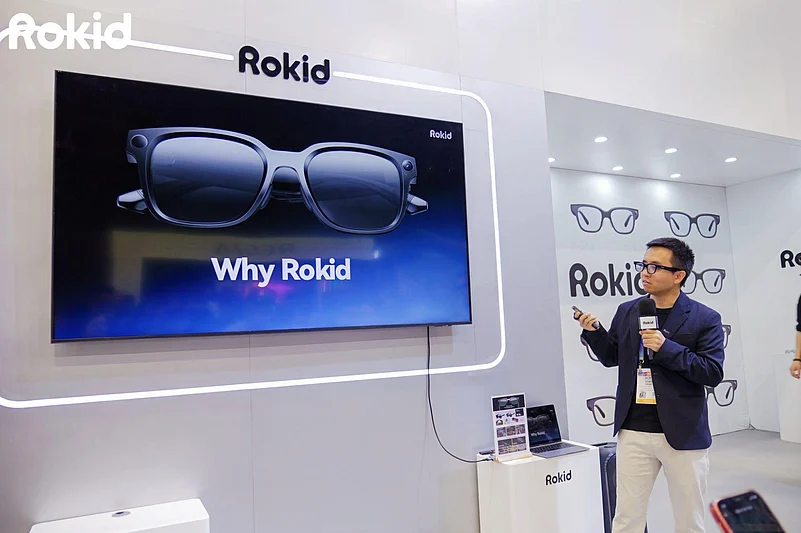
Rokid arrived at CES 2026 with something many exhibitors on the show floor lacked: momentum. Following a year defined by record-breaking global crowdfunding for Rokid Glasses and expanding real-world adoption, the company used CES not to introduce a concept, but to introduce its next product to the market. That product was Rokid Ai Glasses Style, revealed during a live launch event at the Rokid booth.
The launch event, held on January 6 at the Rokid booth, drew media, partners, and attendees who had already seen Rokid’s earlier products and were curious about what came next. The emphasis was not on futuristic promises, but on how the Rokid Ai Glasses Style fits into daily life.
Rokid executives framed the Style launch as a continuation of the company’s trajectory. After proving demand for display-based AI glasses through Rokid Glasses, the company positioned Style as an alternative form factor: even lighter and simpler.
Unlike Rokid Glasses, which incorporate a visual display, Rokid Ai Glasses Style is entirely display-free. Weighing 38.5 grams, the product relies on voice interaction, audio feedback, physical buttons, and head gestures to deliver AI functionality without visual overlays.
Live demos during the launch showcased features that had already gained traction with Rokid’s earlier products, now presented in a form factor that feels even closer to traditional eyewear.




A recurring theme during the event was comfort. Attendees were encouraged to wear Style for extended periods, reinforcing Rokid’s claim that Ai Glasses Style is designed to disappear into daily routines rather than demand constant attention.
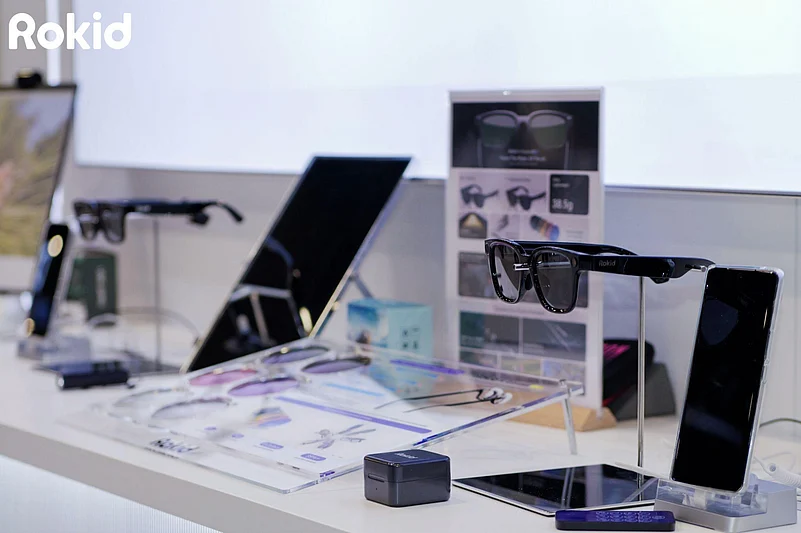

One of the more practical design elements highlighted during the launch was Style’s DIY replaceable lens system. Users can manually change lenses based on preference or scenario, a deliberate choice aimed at durability and long-term everyday use.
Rokid’s CES launch did not happen in isolation. The company entered CES 2026 following the global success of Rokid Glasses, which demonstrated strong demand for AI-powered smart eyewear and helped establish Rokid as a serious contender in the category.
That success shaped the tone of the Style launch. Rather than explaining why AI glasses might matter someday, Rokid focused on how different users might choose different products within the same ecosystem.
Rokid also reiterated its commitment to an open ecosystem, designed to support AI assistance and real-time translation across countries and regions: an area where many smart glasses remain limited.
With a confirmed January 19 consumer release, Rokid Ai Glasses Style moves quickly from CES reveal to real availability. The timeline reinforces Rokid’s broader message at CES 2026: this is no longer an experimental category.
Disclaimer: This is a sponsored article. All possible measures have been taken to ensure accuracy, reliability, timeliness and authenticity of the information; however Outlookindia.com does not take any liability for the same. Using of any information provided in the article is solely at the viewers’ discretion.