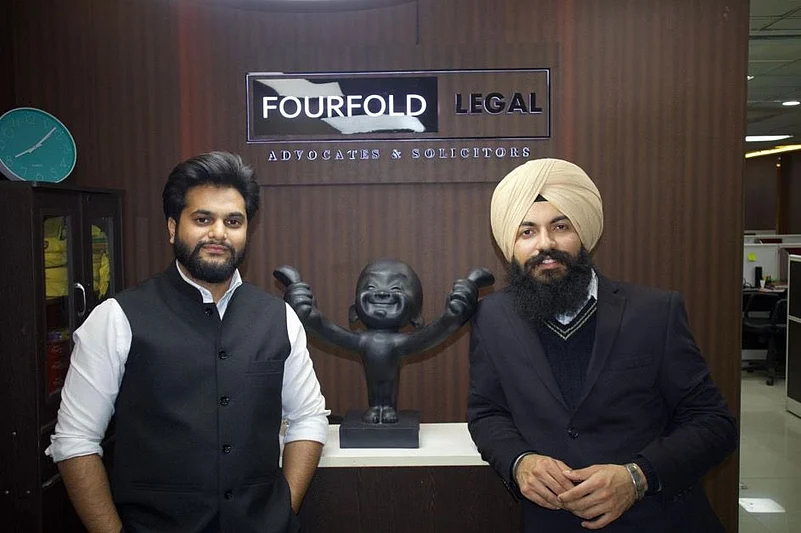
We Grew Slowly, But We Grew Honestly
A Thoughtful Conversation with the Advocates of FourFold Legal
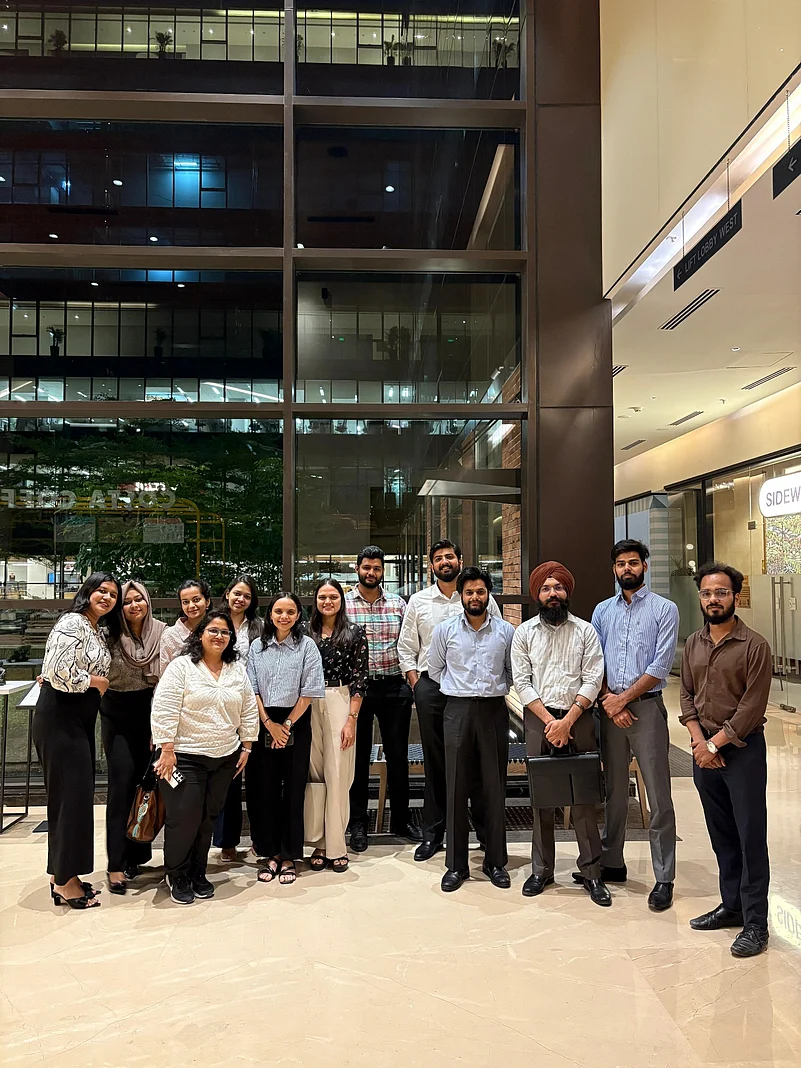
When people hear about FourFold Legal today, they often start with numbers a 120+ advocate and professional team, offices in Noida and Hyderabad, and consistent financial growth over the past few years.
Inside the firm, however, the story is spoken about very differently. It is less about scale and more about people, conversations, mistakes, and the responsibility that comes with giving legal advice.
In this conversation, Advocates Sanjay Rawat, Deepansh Kaushik, Manish Kumar, and Inderjeet Singh reflect on how FourFold Legal grew from four advocates to a 120+ team in four years, and what remained unchanged along the way.
How did FourFold Legal really start?
Sanjay Rawat:
It didn’t start with the idea of building a firm. It started with unease. We were young advocates, handling matters independently, but we kept seeing the same pattern. Clients would come to us already anxious and exhausted.
Many of them didn’t even understand what stage their case was at. They only knew that something serious might happen. We realised the law itself wasn’t always the biggest issue the absence of clear explanation was.
Those early days were mostly conversations. Sitting together after work, reading notices, questioning procedures, and asking each other whether something felt right. Slowly, that way of thinking became our way of working.



You all knew each other from school. Did that make things easier?
Deepansh Kaushik:
Yes, because there was no pretence involved. We had grown up together, so honesty came naturally.
If something felt rushed or incorrect, anyone could say it openly without worrying about hierarchy or ego. That trust became even more important later, when the firm started growing and decisions affected many people beyond the four of us.
When did settlement and ADR become central to your practice?
Manish Kumar:
When we saw the kind of relief it gave people.
Many clients were not looking for prolonged litigation. They were looking for closure. Once issues were placed on record properly and discussions became structured, the tone of disputes often changed.
Settlement was never about giving up. It was about helping people move forward without carrying fear for years. Arbitration, mediation, and ADR naturally became important tools in that process.
Why work largely from the borrower’s side when most firms represent banks and institutions?
Inderjeet Singh:
Because borrowers usually come to us when they feel they no longer have a voice.
We never believed borrowers are always right. But we also never believed they should be silenced or rushed. Our role is to restore balance. Sometimes that means questioning a bank’s process. Sometimes it means telling a client that the bank is acting within the law.
Both conversations are uncomfortable, but both are necessary.

You spend significant time on free initial counselling. Why is that so important?
Sanjay Rawat:
Because clarity changes behaviour.
Every advocate here spends one to two hours with a new client without charging anything. We explain what the law permits, what it does not, and what outcomes are realistically possible.
Many people decide after that conversation not to proceed further and that is completely fine. If someone walks away calmer and informed, we believe our role has been fulfilled. We never wanted to build a practice on confusion or urgency.
The firm grew from four advocates to around 120 people in four years. How did that growth feel internally?
Deepansh Kaushik:
From the inside, it felt gradual even though from the outside it appears rapid.
Growth happened because more people started approaching us earlier, before matters escalated. But each new person also brought responsibility. We had to build systems, create space, and ensure that no one felt lost within the organisation.
Opening a second office in Hyderabad was not about expansion for visibility. It was about managing work properly and ensuring that one team or one city was not overwhelmed.
Can you speak openly about revenue and future goals?
Manish Kumar:
Yes, we believe transparency matters.
In the previous year, the firm generated approximately ₹10 crore in revenue, and we are targeting ₹20 crore in 2026. However, numbers are not chased blindly.
If growth ever forces us to compromise on client counselling or reduce time spent explaining matters, we would rather slow down. Revenue sustains a firm, but trust sustains a legal practice.
Why invest so much in technology when many law firms still rely on manual processes?
Inderjeet Singh:
Because people forget, but systems don’t.
As volume increased, we realised that goodwill alone is not enough. We use CRM systems for client tracking and HRMS tools for internal management not to appear modern, but to reduce errors and pressure on individuals.
When systems function smoothly, advocates can focus on thinking, strategy, and counselling instead of constant firefighting.
Who are you most grateful to as you look back on this journey?
Sanjay Rawat:
The people who joined us early.
They came when there was no established name, no certainty, and no clear roadmap. They stayed while systems were being built and pressure was high. This firm stands today because they trusted the process before it appeared stable.
What do you believe young advocates can genuinely offer clients today?
Sanjay Rawat:
Time and honesty.
We may not promise miracles. But we can listen, explain the law clearly, and speak the truth without pretending. If a matter settles, it is because the law allows it. If it proceeds to court, it is because it must.
Clients deserve clarity more than confidence.
A Quiet Closing
FourFold Legal did not grow by being loud. It grew by listening.
Over four years from four advocates to over 120 professionals, from one office to two cities the firm has tried to hold on to one simple belief:
Law should reduce fear, not create it.
This interview is shared for public legal understanding and reflection. It does not advertise legal services or guarantee outcomes. The views expressed are personal and based on professional experience and applicable Indian law.
Disclaimer: This is a sponsored article. All possible measures have been taken to ensure accuracy, reliability, timeliness and authenticity of the information; however Outlookindia.com does not take any liability for the same. Using of any information provided in the article is solely at the viewers’ discretion.